



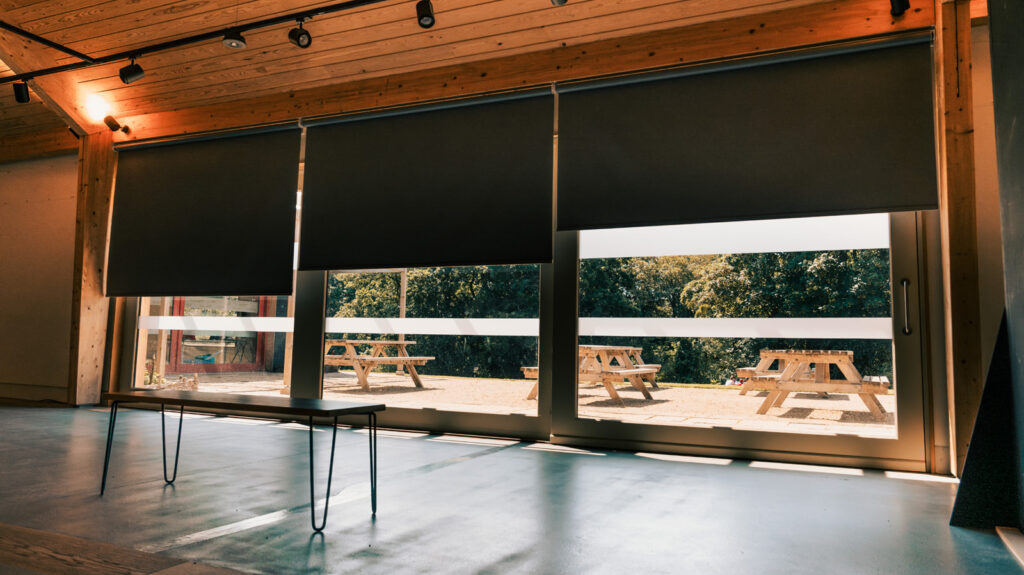

A conservatory is the brightest room in the house and, for much of the year, the least used. Too hot to sit in by July, too cold to bother with by November, it becomes a room you walk through rather than live in. It does not have to be that way. With the right shading, a glass room goes from a two-season space to one you use comfortably for ten months or more.
The problem is almost always the same, and so is the solution. This guide explains why conservatories overheat and lose warmth, what the different blinds actually do about it, and why the roof is the part that matters most. It is also the one area where Sunshade Blinds has no competition on the island: we are the only company in Jersey fitting conservatory roof blinds.
Why a Conservatory Is Hot in Summer and Cold in Winter
The thing that makes a conservatory wonderful, all that glass, is also the thing that makes it hard to live in. Glass does almost nothing to slow the movement of heat, and the roof is where the trouble concentrates.
Around 70 per cent of the heat moving in and out of a conservatory passes through the roof glazing. In summer, the sun sits high in the sky and beats down on that roof all day, and the space heats up like a greenhouse with nowhere for the warmth to go. In winter the flow reverses: the heat you are paying to generate rises and escapes straight up through the glass, and in an older or poorly insulated conservatory as much as 80 per cent of heat loss can happen through the roof.
Side windows play their part, but if you only treat the windows and leave the roof bare, you have addressed the smaller half of the problem. Comfort in a glass room is won or lost at the roof.
What Conservatory Blinds Actually Do
The right blinds put an insulating layer between your room and the glass, and the better products do it remarkably well.
In summer, they reflect and block solar heat. Thermal conservatory fabrics are engineered to turn the sun’s warmth away before it builds up inside. Reflective pleated fabrics can turn back somewhere between 74 and 85 per cent of the sun’s heat, and honeycomb conservatory blinds reflect a large share of it too, which is the difference between a room you flee at midday and one you can sit in.
In winter, they trap warmth before it escapes. Honeycomb blinds are the standout here. The pockets of still air in their cellular structure act as insulation against the cold glass above, and conservatory-specific honeycomb fabrics are credited with reducing heat loss by up to 55 per cent. That keeps the warmth you are paying for in the room instead of letting it drain through the roof.
All year, they cut glare and protect your furnishings. Beyond temperature, blinds tame the harsh glare that makes a bright room uncomfortable and filter the ultraviolet light that fades sofas, flooring, and artwork over time. The result is a softer, more usable light and furnishings that last longer.
The Roof Is the Part That Counts
Because most of the heat moves through the roof, roof blinds are what transform a conservatory, and they are also the hardest thing to fit. Angled and shaped glass, height, and the need for a mechanism that holds fabric neatly against a sloping surface all make roof blinds a specialist job, which is precisely why most companies do not offer them.
Sunshade Blinds does. We are the only company in Jersey fitting conservatory roof blinds, made to measure for the exact shape and pitch of your roof. Pair roof blinds with shading on the side windows and you control the whole envelope of the room rather than half of it, which is what takes a conservatory from occasionally usable to comfortable across the seasons.
For roof blinds in particular, where reaching up to adjust them is awkward, motorisation is worth knowing about. Somfy-powered blinds let you move the roof shading with a remote, an app, or a schedule, and an automated schedule can close the blinds against the midday sun and open them as the day cools, holding the room at a comfortable temperature without you having to think about it.
Choosing the Right Conservatory Blinds
The best specification depends on how your conservatory faces and how you use it.
- South and west-facing conservatories take the most direct summer sun and benefit most from highly reflective roof fabrics and lighter colours that absorb less heat.
- North-facing or heavily used year-round conservatories lean towards honeycomb fabrics, where winter insulation is the priority.
- Conservatories used as dining rooms or studies gain the most from motorised roof blinds on a schedule, so the space is always at the right temperature when you come to use it.
The honest truth is that every glass room is different, and getting the specification right is the difference between a room you reclaim and money spent on blinds that only half solve the problem. Our broader guide to keeping a home comfortable without the energy bill sets out the wider thermal picture.
A Glass Room You Can Actually Use
A conservatory should be the best room in the house: full of light, open to the garden, a place to sit through a Jersey spring or watch a winter storm come in off the sea. With shading designed for the roof as well as the windows, it can be exactly that for most of the year rather than a handful of weeks.
After more than 35 years enhancing homes across Jersey, and as the island’s only manufacturer of bespoke conservatory roof blinds, we have the expertise to transform even the most challenging spaces into comfortable environments.
Frequently Asked Questions
What is the best way to stop a conservatory overheating in summer?
The most effective solution is roof shading, because around 70 per cent of heat enters through the conservatory roof. Reflective thermal roof blinds turn back a large share of the sun’s heat before it builds up inside, and pairing roof blinds with side-window shading controls the whole room. Reflective pleated fabrics can turn away as much as 74 to 85 per cent of solar heat. Plantation shutters are a particularly timeless option, offering excellent light management, privacy, and year-round insulation while complementing the overall aesthetic of the space.
Do conservatory blinds help in winter as well?
Yes. In winter, heat escapes upward through the glass roof, where an older conservatory can lose up to 80 per cent of its heat. Honeycomb roof blinds trap a layer of still air against the glass and are credited with reducing heat loss by up to 55 per cent, keeping the warmth in the room.
Are roof blinds really necessary, or will side blinds do?
Roof blinds deliver the greatest impact, as the majority of solar heat enters through the roof rather than the side glazing. Addressing the windows alone tackles only part of the challenge. For a truly balanced and comfortable environment throughout the year, roof and side shading should work in harmony.
Can I get conservatory roof blinds in Jersey?
Yes. Sunshade Blinds is the only company in Jersey fitting conservatory roof blinds, made to measure for the exact shape and pitch of your roof. It is a specialist installation that most companies do not offer.
Are motorised conservatory blinds worth it?
For roof blinds especially, yes. Reaching up to adjust a roof blind is awkward, so motorisation adds real convenience. A Somfy-powered schedule can close the blinds against the midday sun and reopen them as the day cools, keeping the room comfortable automatically.
Reclaim your conservatory this year. Book a free home consultation. We assess how your glass room faces and how you use it, then recommend roof and window shading made to measure for the space, as the only conservatory roof blind specialist in Jersey. No obligation, just expert advice.