



Choosing blinds sounds straightforward. Then you realise the window treatment that looks stunning in your living room could warp within months in your bathroom. Every room has different demands: moisture, light, safety, the way you actually use the space.
We’ve been fitting blinds across Jersey homes for over 35 years, from granite cottages to modern apartments. During that time, we’ve come across a lot of different challenges. Real wood in a steam-filled bathroom. Sheer fabric in a nursery where your little one needs proper darkness. A luxury Roman blind hung adjacent to a hob.
This guide walks you through the best blind for every room, explains why material matters more than you might imagine and flags the mistakes that could end up costing homeowners hundreds in replacements.
Best Blinds for Kitchens
Your kitchen is one of the hardest-working rooms in the house. Between steam from the hob, splashes from the sink, and cooking grease that settles on every surface, your window treatments need to cope with far more than just looking stylish
What works in Kitchens
Plantation shutters are the natural choice for kitchen windows. Their timeless design suits both modern and traditional spaces while offering exceptional practicality. Crafted from durable, moisture-resistant materials, they’re ideal for busy kitchens and can be wiped clean in seconds.
The adjustable louvres give you precise control over light and privacy throughout the day. Tilt them to soften harsh morning sun while you prepare breakfast, then angle them to let in more light as the day goes on, creating a bright and welcoming space for evening entertaining.
For kitchens with a more traditional feel, faux-wood Venetians give you the warmth of timber without the risk. They resist moisture, won’t warp, and come in finishes that look and feel like real wood.
If you prefer something more minimal, roller blinds in a wipe-clean PVC fabric work well too. They’re practical, fire-retardant, and available in over 200 fabrics, so you won’t struggle to match your kitchen scheme.
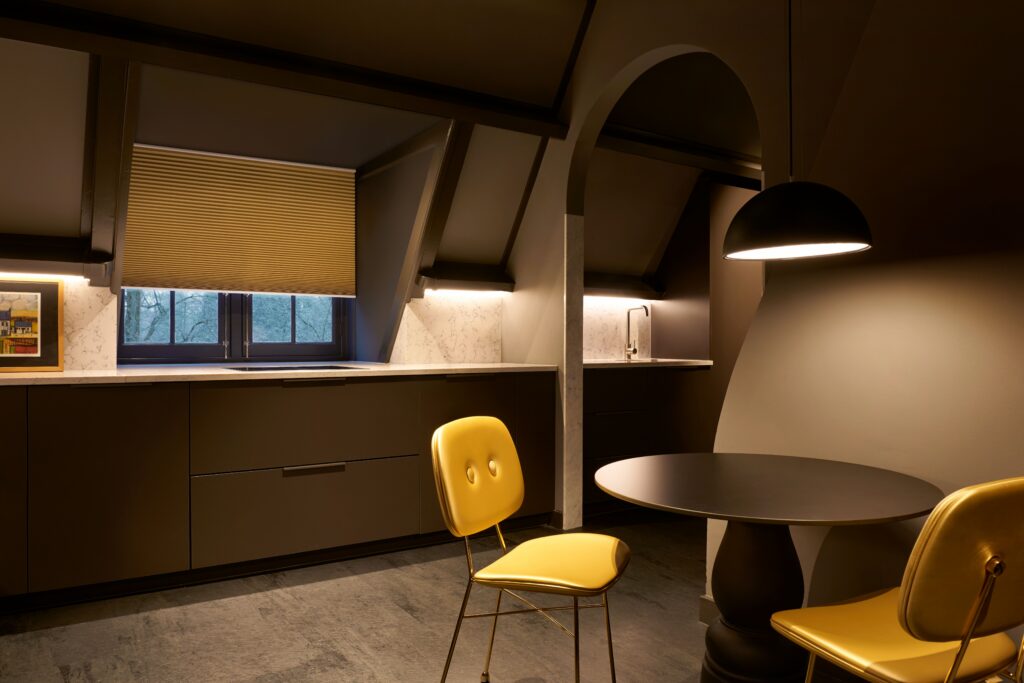
Honeycomb or roller designs are moisture-resistant and easy to clean, making them ideal for busy cooking spaces. Their smart construction also helps regulate temperature, keeping your kitchen comfortable, while the wide range of colours and fabrics lets you complement any kitchen style – from sleek contemporary layouts to cozy, traditional spaces.
The mistake to avoid in the Kitchen
Fitting fabric blinds near your hob. It sounds obvious, but we see it all the time. Untreated fabric absorbs grease, holds odours, and is a fire risk near open flames. If you want a Roman blind in your kitchen, put it at a window well away from the cooking zone, and make sure it’s fire-retardant fabric.
Best Blinds for Living Rooms
Your living room is where you entertain, unwind, and spend the most waking hours at home. The blinds here need to do more than one job: control glare during the day, provide privacy in the evening, and actually look good while doing it.
What works in the Living Room
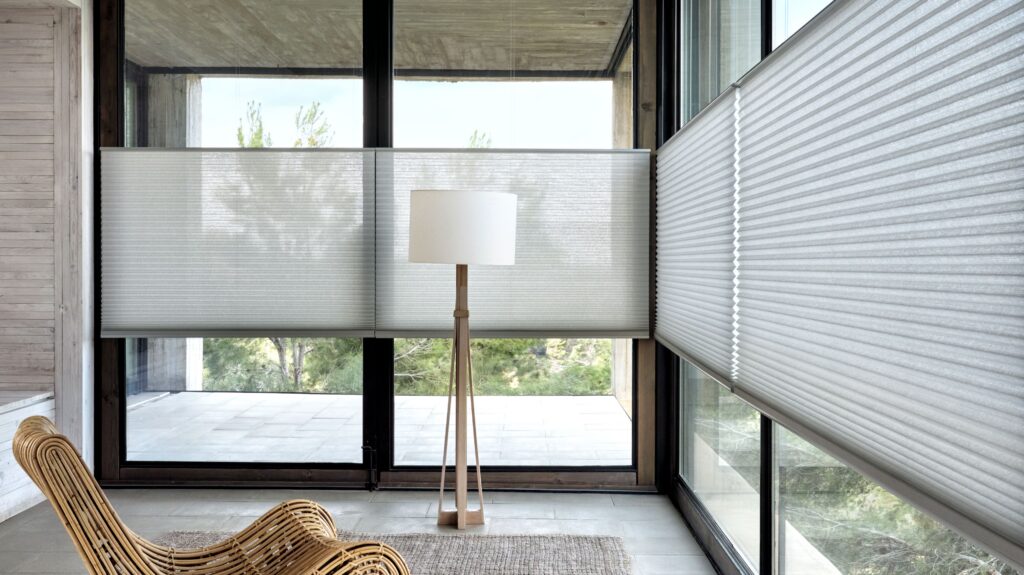
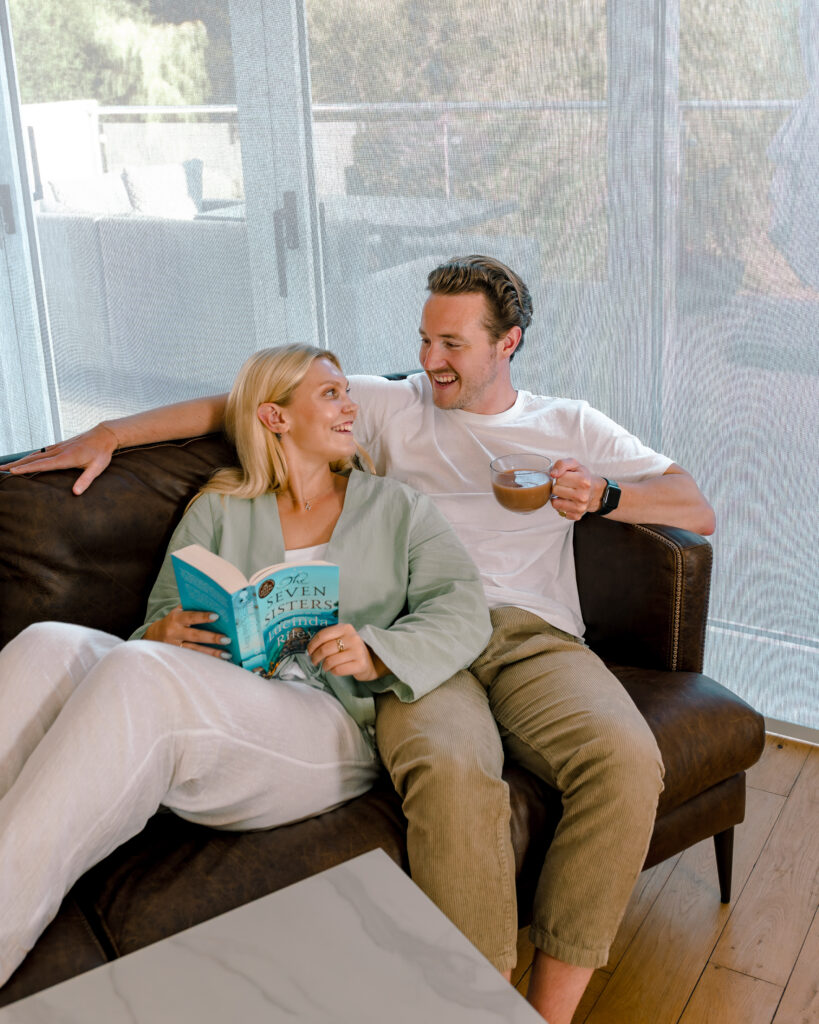
Honeycomb blinds (also called cellular shades) work brilliantly in living spaces. Their cellular structure diffuses harsh sunlight into soft, even ambient light, which gets rid of the glare and hotspots that make watching television or reading uncomfortable. The insulating air pockets also help regulate temperature, keeping your living room comfortable without driving up energy costs.
For added convenience, automated blinds are a great fit for living spaces, allowing you to adjust light and privacy at the touch of a button or on a set schedule. They’re particularly useful for hard-to-reach windows or for fine-tuning the atmosphere throughout the day, helping you make the most of natural light while keeping your space comfortable and easy to manage.
If your living room opens onto a garden or terrace through bi-fold or patio doors, honeycomb blinds with a top-down/bottom-up mechanism are worth knowing about. You lift the blind from the bottom to let high sunlight wash across your ceiling while keeping the lower half closed for privacy. Perfect for ground-floor rooms.
The mistake to avoid in the Living Room
Only thinking about daytime. A fixed sheer looks lovely during the day but leaves you completely exposed once the lights come on in the evening. Your living room needs blinds that can shift from filtered daylight to full privacy. If it can’t do both, it’s wrong for the room.
Best Blinds for Bedrooms
Sleep quality starts with darkness. Proper darkness, not the half-hearted dimming that comes from a badly fitted blind with light leaking around the edges.
What works in the Bedroom
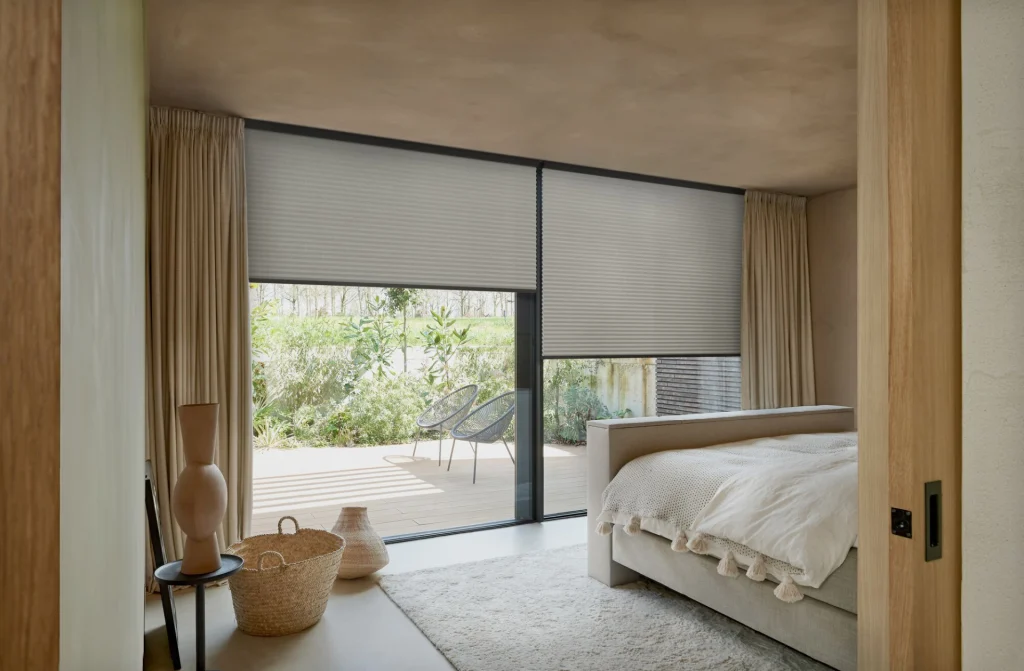
Blackout roller blinds are the gold standard for bedrooms. Made to measure means the fabric sits flush within or just beyond your window frame, blocking virtually all incoming light. For children’s rooms and nurseries, blackout performance is particularly important during the lighter summer months when little ones need to sleep while it’s still bright outside.
For a softer, more decorative look, blackout-lined Roman blinds give you elegance and function together. The cascading fabric folds add warmth and texture, while the thermal lining keeps the room properly dark and helps regulate temperature overnight.
Motorised and automated electric blinds are one of those things you don’t think you need until you have them. Set your Somfy-powered blinds to open gradually with your morning alarm, simulating a natural sunrise. In children’s rooms, motorisation also removes dangling cords and chains entirely, which is the main safety consideration for young families.
The mistake to avoid in the Bedroom
Assuming all “blackout” fabrics perform the same. A blackout roller that’s cut too short or fitted with gaps at the sides will still leak light around the edges. Made-to-measure fitting is the difference between a room that’s properly dark and one where you’re reaching for an eye mask. If total darkness matters (shift workers, light-sensitive sleepers, nurseries), ask about edge-sealing options during your consultation.
Best Blinds for Bathrooms
Bathrooms are tough on the wrong materials. Steam, condensation, direct water splashes, temperature swings. A blind that can’t handle all of that will discolour, warp, or grow mould within months.
What works in Bathrooms
Faux-wood Venetian blinds are our top pick for bathrooms. You get the warm, natural look of timber without any of the moisture problems. Water beads on the surface and wipes off, they won’t warp or swell, and they give you the light and privacy control you need in a bathroom.
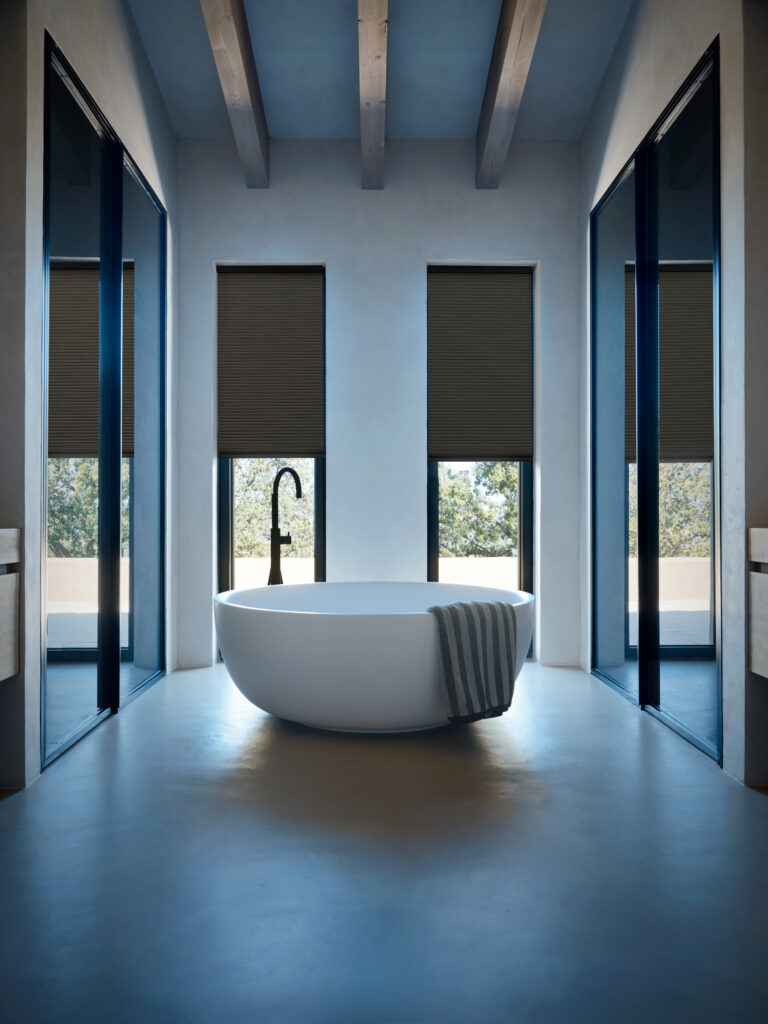
Honeycomb blinds are a smart, practical choice for bathrooms, offering reliable privacy while still allowing soft, natural light to filter through. Their unique cellular design helps to regulate temperature, adding a layer of insulation that keeps the space feeling more comfortable throughout the day, all while maintaining a clean, modern look..
For shower rooms or en-suites where the blind sits close to direct water, PVC roller blinds are the most practical option. They’re fully waterproof, wipe clean, and available in a range of colours and patterns that complement modern bathroom designs.
The mistake to avoid in Bathroom
Real wood in a bathroom. This is the most common mistake we see, and it’s expensive. Real wood Venetians look beautiful, but they can’t handle sustained moisture. Within six months to a year, the slats start to warp, discolour, and lose their shape. If you love the look of wood in your bathroom, faux-wood alternatives are virtually indistinguishable and will last for years.
Best Blinds for Home Offices & Studies
Working from home means you need to see your screen without squinting and feel comfortable throughout the day. Light control in a home office isn’t optional; it directly affects how well you work.
What works for Home Office Spaces
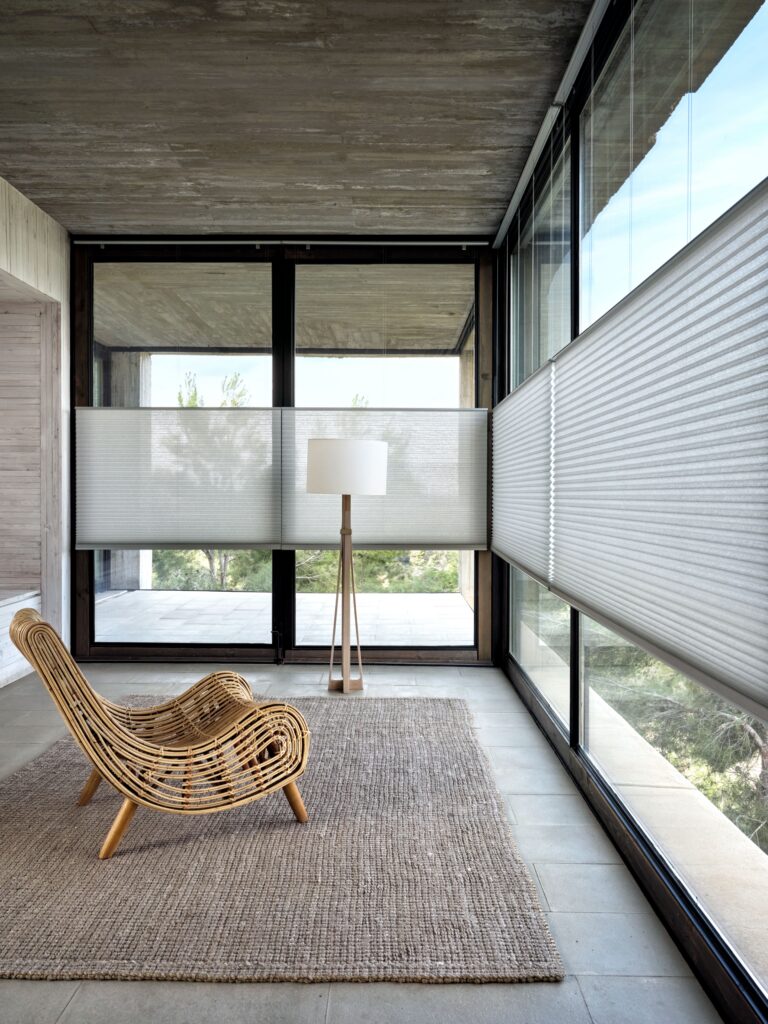
Honeycomb blinds are ideal here. Instead of blocking light entirely, their cellular structure scatters harsh sunlight into soft, diffused ambient light. You lose the screen glare and the distracting hotspots on your desk, but the room still feels naturally bright. The top-down/bottom-up option is especially useful: lift the blind from the base to redirect high sun off your screen while keeping your view of the garden open at the bottom.
Venetian blinds are another good option, especially if your light changes throughout the day. Tilt the slats to redirect sunlight away from your monitor in the morning, then open them wide for a view during your afternoon break.
For video calls, consider how your window treatment looks on camera. A consistent, evenly-lit background reads far better than harsh bands of light and shadow from partially closed blinds.
The mistake to avoid in Home Offices
Sheer blinds in a room where you stare at a screen all day. If your desk faces the window, you need a blind that actually diffuses or redirects light, not one that just takes the edge off. A sheer roller might soften the view, but it won’t stop glare causing eye strain over a full working day. Go for something with adjustable control, and position your desk perpendicular to the window if you can.
How to Choose: A Quick Room-by-Room Summary
| Room | Best Options | Key Requirement | Avoid |
|---|---|---|---|
| Kitchen | Plantation Shutters, faux-wood Venetians, PVC, Honeycomb, rollers | Moisture resistance, fire safety, easy cleaning | Untreated fabric near hobs |
| Living Room | Honeycomb blinds, Automated blinds, Allusion blinds, day/night rollers | Adaptable light control, privacy, style | Single-function blinds for multi-use spaces |
| Bedroom | Blackout rollers, blackout-lined Romans, motorised blinds | Total darkness, child safety, temperature regulation | Poorly fitted “blackout” blinds with light gaps |
| Bathroom | Faux-wood Venetians, Honeycomb, Venetians, PVC rollers | Waterproof, mould-resistant, easy maintenance | Real wood in any moisture-heavy environment |
| Home Office | Honeycomb blinds, Venetians with adjustable slats | Glare diffusion, adjustable control, even light | Sheer blinds that can’t manage direct sun |
Why the Right Advice Matters as Much as the Right Blind
A blind is only as good as its fit, and the fit depends on understanding the room it’s going into. Moisture levels in your bathroom, light direction in your office, fire safety near your hob, darkness needs in your nursery. Every detail shapes the recommendation.
That’s why we start every project with a proper consultation. We come to your home, assess each room, and bring fabric samples you can see and feel in your own light. It’s about finding what actually suits your space, not pushing whatever’s in stock.
With over 35 years fitting blinds across Jersey, and many products made at our St John workshop, we know how to turn a window treatment into something you’ll enjoy for years.
Frequently Asked Questions
What are the most durable blinds for high-moisture rooms?
Faux-wood Venetian blinds and plantation shutters are the most durable options for bathrooms, kitchens, and utility rooms. Both materials resist moisture, won’t warp or discolour, and wipe clean easily. For areas with direct water contact, PVC roller blinds offer a fully waterproof solution.
Are motorised blinds worth the investment?
For bedrooms, hard-to-reach windows, and families with young children, yes. Somfy-powered automation lets you schedule blinds to open and close with your routine, works with Alexa, Google Home, and Apple HomeKit, and gets rid of dangling cords entirely. That last point alone makes them the safest option for nurseries.
How do I stop light leaking around my blackout blinds?
Light leakage is almost always a fitting problem, not a fabric problem. Made-to-measure blackout blinds that are correctly fitted, either within the recess or with an overlap beyond the frame, will block virtually all light. During your home consultation, we measure precisely and advise on the best mounting position for your windows.
Can I use the same blind type throughout my whole house?
You can, but you probably shouldn’t. Each room has different demands (moisture, light, privacy, safety) and the blind that works brilliantly in your living room may struggle in your bathroom. A room-by-room approach means every window treatment is working with the room, not against it.
How long do quality blinds last?
Well-made, properly fitted blinds typically last 7 to 10 years with normal use. Higher-quality mechanisms and fabrics, especially from our Coulisse range, often go well beyond that. Regular light cleaning and not forcing the mechanisms will extend their life further.
Ready to get it right first time? Book a free room-by-room consultation. No obligation, no pressure.